10k Gold vs 14k Gold: Which Should You Choose?
A practical head-to-head comparison of 10k Gold and 14k Gold, covering quick verdict, key differences, category winners, buyer fit, and FAQ.
10k Gold vs 14k Gold: Which Should You Choose?
Head-to-head comparison
Overall winner: 14k Gold for its superior balance of rich colour, durability, and intrinsic value.
For most buyers, 14k gold is the ideal choice for fine jewellery, offering the classic warm yellow glow alongside excellent resilience for daily wear. It's the perfect investment for significant pieces like engagement rings and heirlooms. However, 10k gold is an outstandingly practical and affordable alternative, with superior hardness that makes it perfect for those with very active lifestyles or anyone seeking the longevity of solid gold on a tighter budget.
To help you make the best choice for your next jewellery purchase, we've analysed the material properties, market standards, and real-world performance of both 10k and 14k gold. This comparison is based on extensive research into official jewellery standards, metal compositions, and patterns in long-term buyer feedback.
Choosing between 10k and 14k gold is one of the most common decisions when buying fine jewellery. The "k" stands for karat, a measurement of gold purity out of 24 parts. While it's tempting to think more gold is always better, the reality is more nuanced. The alloys mixed with pure gold determine a piece's colour, hardness, and price. Your final decision should depend entirely on your personal priorities for appearance, lifestyle, and budget, as there is no single "best" choice for everyone.
Option A
10k Gold
- Best for: High-contact daily wear & budget-conscious buyers
- Strength: Maximum durability & scratch resistance
- Tradeoff: Paler yellow colour & lower intrinsic value
Option B
14k Gold
- Best for: The classic fine jewellery standard
- Strength: Rich, warm colour & higher gold content
- Tradeoff: Higher price point & slightly less durable
Head-to-Head Scorecard
10k Gold vs 14k Gold: Key Differences
The fundamental difference between 10k and 14k gold lies in their composition. Pure gold (24k) is too soft for jewellery, so it's mixed with other metals—like copper, silver, zinc, and nickel—to create a stronger, more durable alloy. The karat number tells you how many parts out of 24 are pure gold.
- 10k Gold is 10 parts pure gold and 14 parts alloy metals. This equates to 41.7% gold purity (stamped with '417' in the UK and Europe).
- 14k Gold is 14 parts pure gold and 10 parts alloy metals. This equates to 58.3% gold purity (stamped with '585').
This simple difference in gold content directly impacts every other attribute, from the warm glow of the metal to how well it withstands the rigours of daily life. 14k gold offers more of the precious metal you're paying for, resulting in a richer colour and higher intrinsic value. In contrast, 10k gold's higher alloy content makes it the tougher, more resilient, and more affordable of the two, creating a compelling choice for practical, everyday pieces.
Measurement
Durability and Routine Fit
Durability is a critical factor for any piece of jewellery you plan to wear regularly, especially for items like rings and bracelets that are prone to knocks and scuffs. The hardness of gold jewellery is determined by the alloys mixed with it, not by the gold itself. Pure 24k gold is extremely soft and malleable, making it unsuitable for most designs.
Because 10k gold contains a higher percentage of strengthening alloys (68.3% vs. 41.7% in 14k gold), it is measurably harder and more durable. It is more resistant to scratching, bending, and general wear and tear. This makes it an exceptionally practical choice for individuals with highly active lifestyles, those who work with their hands, or for jewellery that will be worn every single day without fail. Think wedding bands for a tradesperson, a simple chain you never take off, or a signet ring that sees constant action.
While 10k gold has the edge in pure toughness, it's important not to misinterpret this as 14k gold being weak. 14k gold is still a very strong and durable material, and it represents the global standard for fine jewellery precisely because it offers an excellent combination of strength and gold purity. It is more than capable of withstanding daily wear for decades, which is why it's the most popular choice for engagement rings. However, when compared head-to-head on the single metric of scratch and dent resistance, the science is clear: the higher alloy content of 10k gold makes it the tougher metal.
Measurement
Colour and Appearance
The visual appeal of gold is arguably its most prized quality, and the karat number has a direct and noticeable impact on its colour. The warm, radiant glow we associate with gold comes from the pure metal itself. Consequently, the higher the gold content, the richer and more saturated the yellow hue will be.
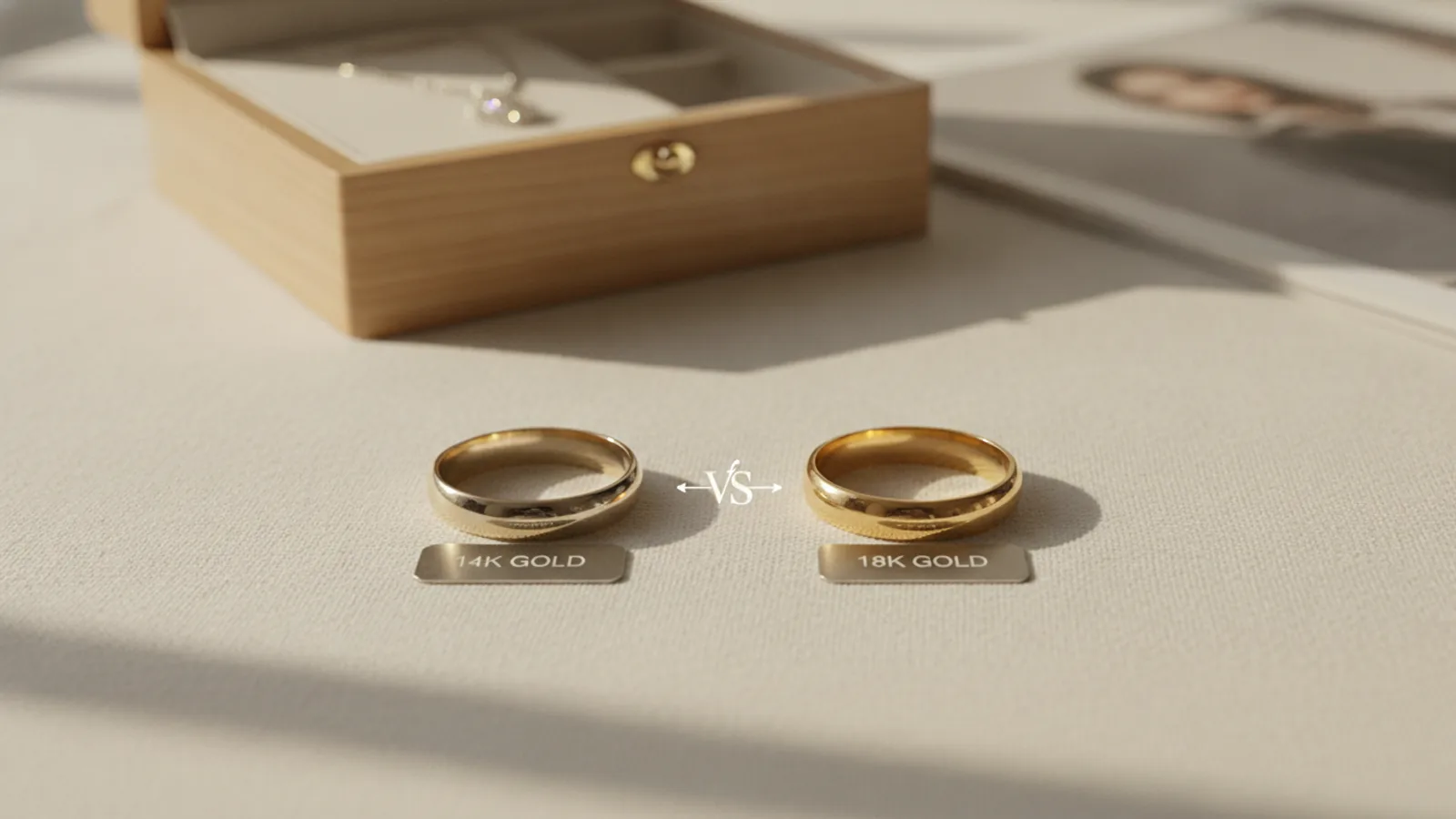
14k gold, with its 58.3% purity, boasts the classic, buttery yellow colour that is the hallmark of fine jewellery. It has a vibrant warmth and lustre that is immediately recognisable and highly sought after. This is the colour most people picture when they think of a gold ring or necklace. Its appearance is universally considered premium and is the benchmark against which other gold alloys are often measured.
In contrast, 10k gold's lower gold content (41.7%) results in a visibly paler, more subtle shade of yellow. The higher concentration of alloys, which often include silver or zinc, dilutes the intensity of the gold's natural colour. While some individuals may prefer this understated and less brilliant look, it can sometimes appear washed out when placed next to a 14k or 18k piece. For those whose primary motivation is achieving that iconic, rich gold aesthetic, 14k is the clear favourite.
Measurement
Hypoallergenic Properties
For those with sensitive skin, the composition of their jewellery is not just a matter of aesthetics but of comfort and health. True allergic reactions to gold are exceptionally rare; the culprit is almost always one of the alloy metals mixed in, with nickel being the most common offender.
The logic here is straightforward: the lower the gold purity, the higher the concentration of potentially irritating alloy metals. 10k gold is composed of 58.3% other metals, while 14k gold contains only 41.7%. This means that with 10k gold, you have a statistically higher exposure to a larger volume of potential allergens like nickel, copper, or zinc.
For this reason, 14k gold is generally considered the safer choice for individuals with known metal allergies or sensitive skin. While it's not a guarantee against a reaction—as some 14k alloys may still contain nickel—the reduced percentage of non-gold metals significantly lowers the risk. Many jewellers now offer certified nickel-free alloys in both 10k and 14k gold, but if you're buying off the shelf without that specific guarantee, 14k provides better odds for comfortable, irritation-free wear.
Measurement
Value and Price
When assessing value, it's crucial to distinguish between initial affordability and long-term intrinsic worth. The price of any piece of gold jewellery is primarily driven by its "melt value"—the market price of its pure gold content—plus the costs of labour, design, and retail markup.
From an affordability standpoint, 10k gold is the undisputed winner. Since it contains significantly less pure gold than 14k gold (41.7% vs. 58.3%), its base material cost is much lower. This makes 10k gold an excellent entry point into the world of fine, solid gold jewellery. It allows buyers on a tighter budget to own a durable, long-lasting piece without the higher price tag of 14k or 18k gold. This is what we define as "value for money"—getting the best possible product for the lowest possible price.
However, when considering long-term or resale value, the tables turn. 14k gold holds more intrinsic value simply because it contains more of the precious metal. If you were to sell the item based on its weight, the 14k piece would fetch a higher price. It is also perceived as more prestigious and desirable in the fine jewellery market, which can contribute to better value retention over time. But for the average consumer focused on the purchase price and the utility of the item, 10k offers unbeatable access to the solid gold category.
Measurement
Buyer Confidence and Market Standard
Buyer confidence often comes from choosing a product that meets or exceeds industry standards and popular expectations. In the global fine jewellery market, particularly in North America, 14k gold is the dominant standard. It is the most popular choice for engagement rings, wedding bands, and other significant pieces, representing a baseline of quality, beauty, and value.
Choosing 14k gold means you are buying into this trusted standard. You can be confident that the piece will have the rich colour people expect from fine gold and that it holds a respectable level of precious metal value. It's a safe, reliable, and widely celebrated choice that eliminates guesswork.
While 10k gold is perfectly legitimate "real" gold, it is sometimes perceived as a "budget" option and is less common in high-end bridal and heirloom collections. In the UK, 9k ('375') and 18k ('750') gold are the more traditional standards, with 14k ('585') gaining immense popularity due to global trends. 10k ('417') is less common historically but is now widely available online. For a buyer seeking the assurance of the most popular and respected industry benchmark, 14k gold provides greater confidence.
Choose 10k Gold If...
- You have a very active lifestyle: If you work with your hands or are prone to being rough with your jewellery, the superior hardness and scratch resistance of 10k gold is a significant advantage.
- You are on a strict budget: 10k gold offers the experience and longevity of solid gold—which will not chip or wear through like plated items—at a much more accessible price.
- You prefer a subtle look: If you find the rich yellow of higher-karat gold to be too bold, the paler, softer hue of 10k gold may be more to your taste.
- You are buying for durability over all else: For a piece like a simple wedding band or a chain you'll never take off, 10k's toughness is its greatest asset.
Choose 14k Gold If...
- You want the classic gold colour: 14k gold provides the rich, warm, and vibrant yellow hue that is synonymous with fine jewellery.
- The item is a significant piece: For engagement rings, wedding bands, anniversary gifts, or future heirlooms, 14k is the industry standard for a reason.
- You have sensitive skin: With a lower percentage of potentially irritating alloy metals, 14k gold is a safer choice for those prone to metal allergies.
- Intrinsic value is important to you: You want a piece with a higher concentration of pure gold, giving it greater value as a precious metal.
Choose 10k Gold If
- You want the stronger default fit after checking the current evidence.
- You care about broader usefulness across the main comparison criteria.
- You prefer the option with clearer decision support for most readers.
Choose 14k Gold If
- Your situation matches 14k Gold's narrower strength more closely.
- You prefer a simpler starting point with fewer tradeoffs to manage.
- You have verified the current details and they fit your specific priority.
Final Verdict: 10k Gold vs 14k Gold
After a detailed comparison, 14k gold emerges as our overall winner. It strikes the perfect balance that most people seek in fine jewellery: a beautiful, rich colour, excellent durability suitable for everyday wear, and a significant level of intrinsic value. It is the quintessential choice for important, lifelong pieces where appearance and prestige are paramount. For anyone investing in an engagement ring, a special gift, or an heirloom piece, 14k gold is the most reliable and satisfying choice.
However, this does not diminish the compelling case for 10k gold. It is not a "lesser" metal, but rather a more practical one. Its superior hardness and lower price point make it an outstanding option for individuals who prioritise durability and affordability. If you're looking for a solid gold piece that can withstand the toughest daily wear or want to enter the fine jewellery market without a significant financial stretch, 10k gold is a smart, strong, and sensible choice.
Ultimately, your decision rests on your priorities. For timeless beauty and the industry standard, choose 14k. For maximum durability and value for money, choose 10k.
10k Gold vs 14k Gold: Which Should You Choose? FAQ
Is 10k gold considered "real" gold?
Yes, absolutely. 10k gold is real gold. To be legally sold as gold jewellery, an item must contain a certain percentage of pure gold. 10k gold is 41.7% pure gold mixed with other alloys. Any solid gold item will have a hallmark or stamp (e.g., '10k' or '417') indicating its purity.
Does 10k gold tarnish or turn your skin green?
Pure gold does not tarnish. However, the alloy metals mixed with it, particularly copper, can sometimes react to skin chemistry, sweat, or chemicals, causing minor discoloration on the metal or a green mark on the skin. Because 10k gold has a higher alloy content, this is slightly more likely to happen than with 14k gold, though it is still uncommon for most people. Any discoloration on the jewellery itself can be easily cleaned off.
Which is better for an engagement ring, 10k or 14k gold?
14k gold is the most popular and recommended choice for engagement rings. Its rich colour is considered more premium, it's the industry standard, and it offers excellent durability for a ring that will be worn daily for a lifetime. However, 10k gold's superior hardness makes it a very practical and durable option, especially for someone with an extremely active lifestyle, and it's a great way to afford a larger or higher-quality stone on the same budget.
Can you tell the difference between 10k and 14k gold by looking at them?
Yes, if you look closely or place them side-by-side, you can see a difference. 14k gold has a noticeably richer, more saturated yellow colour. 10k gold is a paler, more subtle shade of yellow. On its own, an untrained eye might not immediately identify a piece as 10k, but the difference in lustre and hue is apparent in a direct comparison.
How are 10k and 14k gold hallmarked in the UK?
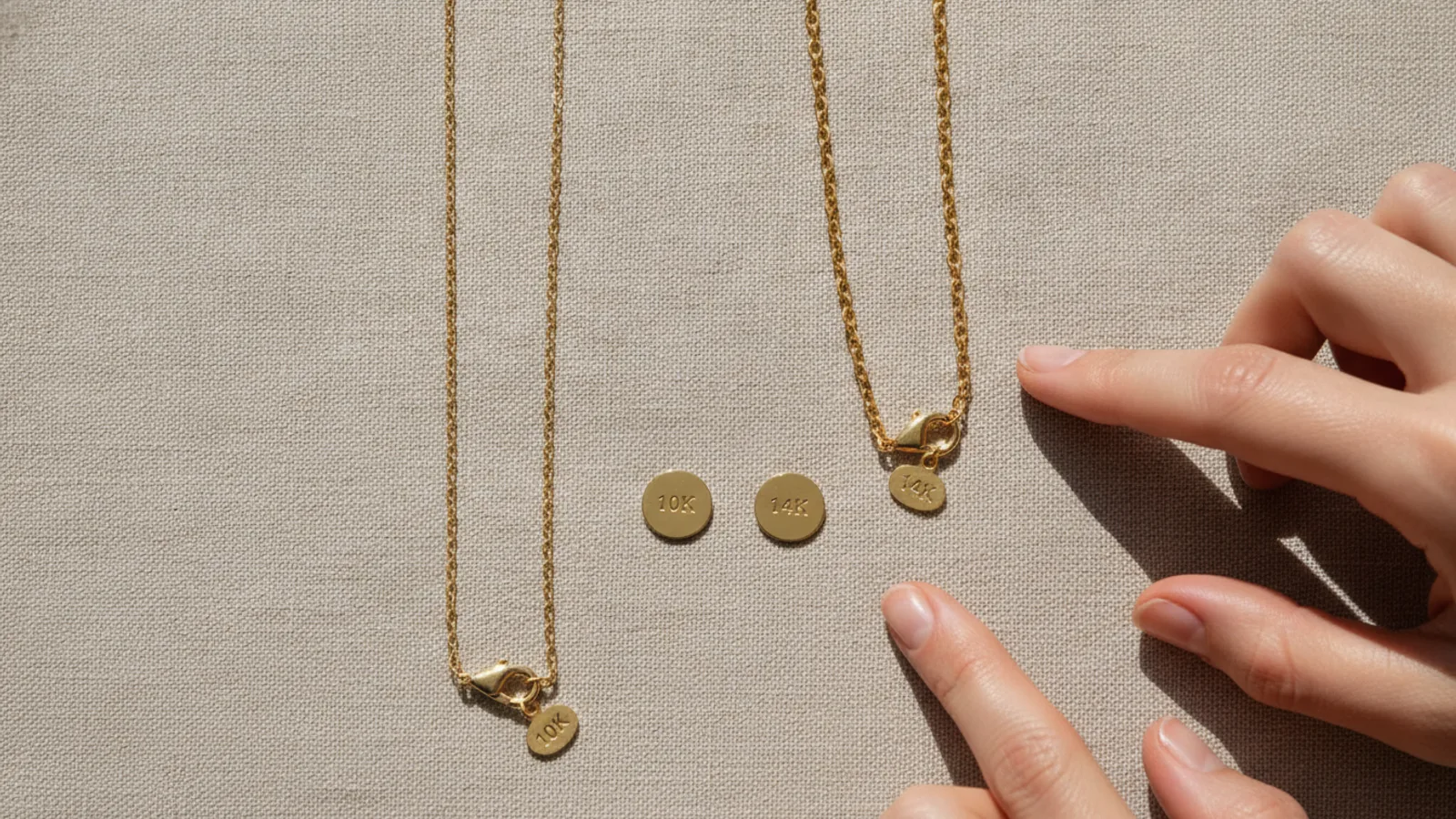
In the United Kingdom, jewellery is hallmarked based on its millesimal fineness, which is the purity expressed in parts per thousand. 10k gold (41.7% pure) is hallmarked with the number '417'. 14k gold (58.3% pure) is hallmarked with '585'. You will typically see this number stamped in a tiny cartouche on the inside of a ring or near the clasp of a necklace.