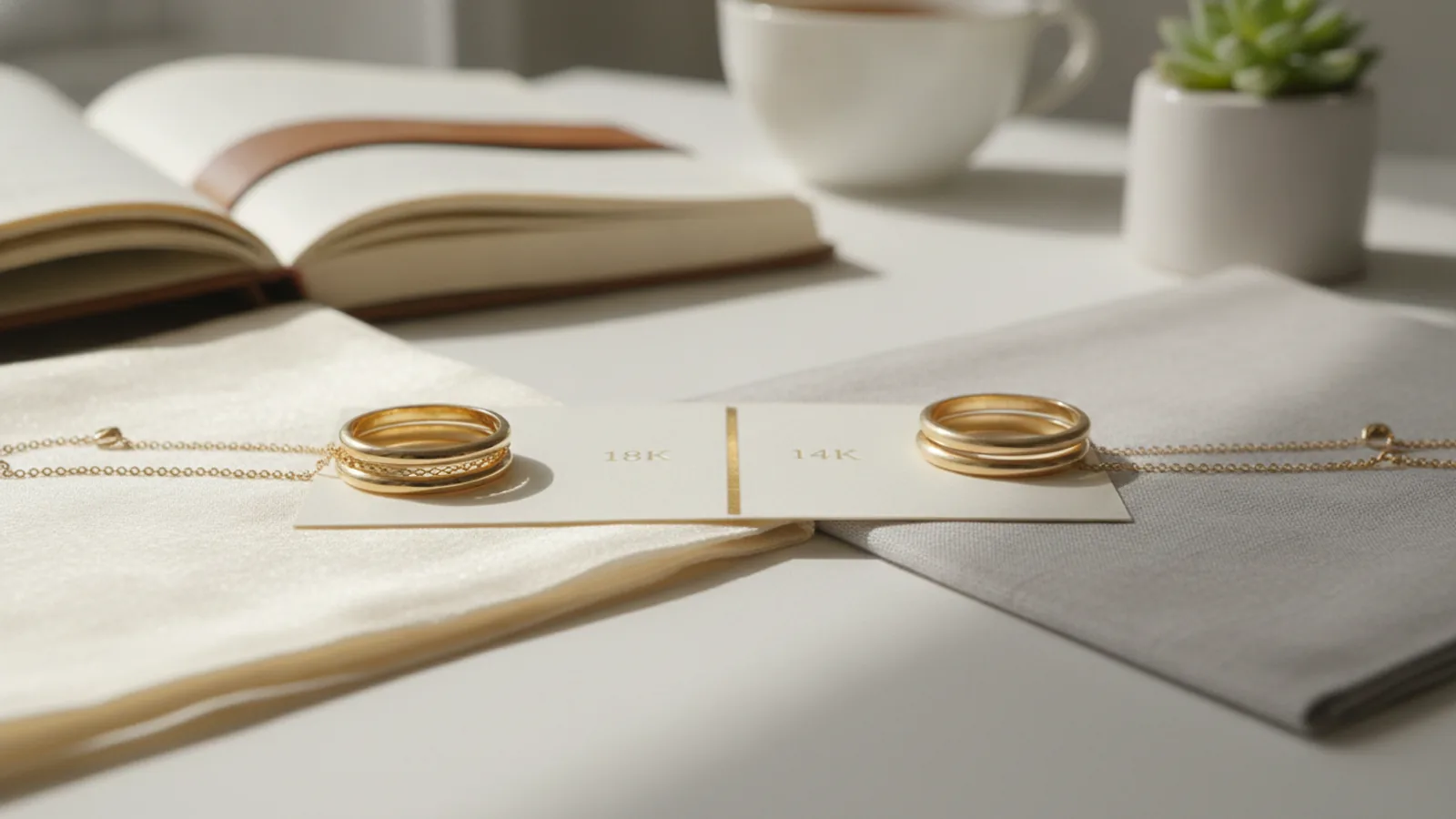
Head-to-head comparison
Overall winner: 14k Gold for its exceptional balance of durability and value.
For most UK buyers, 14k gold is the superior choice for jewellery intended for daily wear, such as engagement rings and wedding bands. It offers impressive resilience against scratches and dents without a significant compromise on colour. 18k gold, with its higher purity, boasts a richer, more luxurious hue and is more hypoallergenic, making it the perfect option for special occasion pieces or for those with sensitive skin.
This in-depth comparison is the result of extensive research into the material science, market trends, and real-world owner experiences associated with both 18k and 14k gold. We've analysed the trade-offs between purity and practicality to provide a clear, trustworthy guide for your next fine jewellery purchase.
Choosing between 18k and 14k gold is one of the most common decisions when buying fine jewellery. The "k" stands for karat, a measure of the purity of gold out of 24 parts. While it's easy to assume more gold is always better, the reality is more nuanced. The metals that gold is alloyed with provide essential strength and durability. Your final choice depends entirely on how you balance the desire for rich colour and purity with the practical demands of your lifestyle and budget.
Option A
18k
- Best for special occasions
- Richer, deeper colour
- Higher purity & prestige
Option B
14k Gold
- Best for everyday wear
- Excellent durability
- Superb value for money
Head-to-Head Scorecard
18k vs 14k Gold: Key Differences
The fundamental difference between 18k and 14k gold lies in their composition. Pure gold, or 24k gold, is too soft for crafting durable jewellery. To strengthen it, gold is mixed (or alloyed) with other metals like copper, silver, zinc, and nickel. The karat number tells you how many parts of gold, out of 24, are in the alloy.
- 18k Gold: Composed of 18 parts pure gold and 6 parts other metals. This means it is 75% pure gold (18 divided by 24). It is the European standard for fine jewellery.
- 14k Gold: Composed of 14 parts pure gold and 10 parts other metals. This equates to 58.3% pure gold (14 divided by 24). It is the most popular choice for jewellery in the United States and is increasingly favoured in the UK for its practicality.
This 16.7% difference in pure gold content is the source of all other variations between the two. The higher percentage of alloy metals in 14k gold makes it harder and more durable, while the higher percentage of pure gold in 18k makes it heavier, softer, and gives it a richer, more intense colour. Understanding this core distinction is key to choosing the right gold for your needs.
Measurement
Routine Fit (Durability)
When it comes to jewellery you plan to wear every day, durability is paramount. An engagement ring, wedding band, or a favourite bracelet is exposed to constant contact with desks, door handles, and countless other surfaces. This is where the composition of the gold alloy becomes critically important.
14k gold contains a higher proportion of strengthening alloy metals (41.7%) compared to 18k gold (25%). This makes it significantly harder and more resistant to the realities of daily life. A 14k gold ring is less likely to scratch, bend out of shape, or show dents from accidental impacts. This added resilience provides peace of mind, especially for those with active lifestyles or hands-on jobs. While not indestructible, 14k gold offers a robust structure that holds gemstones securely and maintains its finish for longer with less maintenance.
18k gold, being 75% pure gold, is inherently softer. It is more susceptible to scratches and can be dented more easily. While it is certainly durable enough for careful wear, it requires more consciousness and care from the wearer. It's an excellent choice for items that are less exposed to impact, like earrings and pendants, or for rings that are reserved for special occasions rather than worn 24/7.
Measurement
Formula (Purity & Colour)
The visual appeal of gold is its most defining characteristic, and the purity level directly impacts its colour. The warm, radiant glow of gold is what has captivated humanity for millennia, and this is where 18k gold truly shines.
With 75% pure gold in its alloy, 18k gold possesses a distinctly rich, deep, and saturated yellow hue. When you place an 18k piece next to a 14k piece, the difference is often noticeable to a discerning eye. The 18k gold appears warmer and more intensely yellow, projecting a sense of luxury and opulence. This is because there is simply more of the pure yellow metal to reflect light. For those who love the classic, unmistakable look of high-purity gold, 18k is the undisputed champion.
14k gold is, of course, still a beautiful yellow gold. However, with a lower gold content of 58.3%, its colour is slightly less intense. The higher percentage of other metals like silver and copper can give it a slightly paler or lighter yellow appearance in comparison. For some, this subtler tone is actually preferable, but for those seeking the most vibrant and luxurious gold colour possible, 18k holds the advantage.
Measurement
Ease of Use (Maintenance & Hypoallergenic Properties)
"Ease of use" in jewellery covers two main areas: how much care it requires and how it interacts with your skin. While 14k gold's durability might suggest it's "easier" to own, the question of skin sensitivity tips the scales in favour of 18k gold.
Metal allergies, particularly to nickel, are a common concern. Nickel is often used as an alloy in gold to provide strength and to bleach it for white gold. Because 18k gold is 75% pure, it contains only 25% other metals. This lower concentration of potential irritants makes it a much safer choice for individuals with sensitive skin or known metal allergies. Pure gold itself is virtually inert and hypoallergenic. Therefore, the higher the karat, the less likely it is to cause a reaction.
While 14k gold is safe for most people, its higher alloy content (41.7%) means a greater chance of containing enough nickel or another metal to trigger a skin reaction in susceptible individuals. In terms of physical maintenance, both karats require regular cleaning to maintain their lustre, but 18k gold's softness means it may need professional polishing more frequently to remove surface scratches.
Measurement
Value (Cost vs. Quality)
For most shoppers, the final purchase decision involves a careful calculation of cost versus the quality and features received. In the contest between 18k and 14k gold, the definition of "value" is key. While 18k gold has a higher intrinsic value due to its gold content, 14k gold often represents better overall value for the modern jewellery buyer.
The price of a piece of gold jewellery is largely determined by its gold content. Since 18k gold contains significantly more pure gold than 14k gold, it is always more expensive, often by 25-40% for an identical item. This is a substantial price difference. 14k gold allows you to get a visually similar, and functionally more durable, piece of fine jewellery for a much more accessible price. It hits the sweet spot for a huge segment of the market, offering the beauty of gold and the strength needed for longevity without the premium price tag of higher-karat alloys.
For a buyer whose primary concern is a beautiful, long-lasting piece for daily wear, such as an engagement ring, the extra cost of 18k gold may not translate into a tangible benefit. The money saved by choosing 14k could be allocated to a better quality diamond or simply kept in the bank. 14k gold delivers the quintessential gold experience with added durability at a price that makes sense for more people.
Measurement
Buyer Confidence (Prestige & Resale Value)
Buyer confidence is tied to the long-term value and perceived status of a purchase. Fine jewellery is often an investment and a future heirloom, and in this context, the purity of the gold plays a significant role.
18k gold is the standard for fine jewellery in much of the world, particularly in Europe and Asia. It carries an aura of luxury and prestige that 14k gold, while popular, doesn't quite match. Owning an 18k piece signifies a choice for higher purity and quality. This prestige translates directly into its long-term and resale value. The value of gold when sold for scrap is based purely on its weight and purity. An 18k gold item will always be worth more than a 14k gold item of the same weight because it simply contains more of the precious metal.
For those purchasing jewellery as an investment, as a status symbol, or as an heirloom to be passed down through generations, 18k gold offers greater confidence. Its higher intrinsic value is a tangible asset, and its reputation as the benchmark for luxury provides an intangible sense of quality and permanence.
Choose 18k Gold If...
- You prioritise the richest colour: You want the deepest, most saturated yellow gold hue available for a truly luxurious look.
- You have sensitive skin: The lower alloy content makes 18k gold an excellent choice to avoid potential skin irritation or allergic reactions.
- The jewellery is for special occasions: For pieces like dress rings, pendants, or earrings that won't be subject to daily wear and tear, the softness of 18k gold is less of a concern.
- Prestige and investment value are important: You view fine jewellery as an asset and want the higher intrinsic value and status associated with 75% pure gold.
Choose 14k Gold If...
- The item is for everyday wear: For an engagement ring, wedding band, or a bracelet you never take off, 14k gold's durability is a significant advantage.
- You have an active lifestyle: If you work with your hands, play sports, or are generally less gentle with your jewellery, 14k gold will better resist scratches and dents.
- You're seeking the best value: You want a beautiful, durable piece of fine gold jewellery at a more accessible price point.
- You prefer a slightly more subtle gold tone: The slightly paler hue of 14k gold appeals to your aesthetic more than the intense yellow of 18k.
Choose 18k If
- You want the stronger default fit after checking the current evidence.
- You care about broader usefulness across the main comparison criteria.
- You prefer the option with clearer decision support for most readers.
Choose 14k Gold If
- Your situation matches 14k Gold's narrower strength more closely.
- You prefer a simpler starting point with fewer tradeoffs to manage.
- You have verified the current details and they fit your specific priority.
Final Verdict: 18k vs 14k Gold
After a thorough comparison, 14k gold emerges as our overall winner and the recommended choice for the majority of UK shoppers. It masterfully balances the essential qualities of fine jewellery: beauty, longevity, and affordability. Its superior durability makes it the undisputed champion for items that are meant to be worn and loved every day, offering priceless peace of mind without a noticeable compromise in its beautiful golden appearance. For milestone purchases like engagement rings and wedding bands, 14k gold is the sensible, practical, and still wonderfully romantic option.
However, this does not diminish the allure of 18k gold. It remains the pinnacle of luxury, purity, and colour. If your budget allows, your skin demands it, or your lifestyle can accommodate its softer nature, 18k gold is a magnificent choice that offers a visual richness and intrinsic value that is second to none. It is the perfect material for treasured, special-occasion pieces that radiate pure opulence.
Ultimately, the best choice is personal. Assess your lifestyle, priorities, and budget. If your heart is set on daily wear and practical value, choose 14k gold with confidence. If you seek the ultimate in colour, purity, and prestige, 18k gold is an exceptional investment.
18k vs 14k Gold: Which Should You Choose? FAQ
Which is better for an engagement ring, 18k or 14k gold?
For most people, 14k gold is the better choice for an engagement ring. Its enhanced durability and hardness make it more resistant to the scratches, scuffs, and impacts of everyday life. This means the setting will remain more secure and the band will look newer for longer. While 18k gold is a beautiful luxury option, it is softer and may not be suitable for someone with a very active lifestyle.
Does 18k gold scratch easily?
Yes, relative to lower-karat golds, 18k gold does scratch more easily. Because it is 75% pure gold, a very soft metal, it is more susceptible to surface marks and dents than 14k or 9k gold. This is a key trade-off for its superior colour and purity. Regular polishing can remove minor scratches, but for daily wear, extra care is required.
Can you tell the difference between 18k and 14k gold visually?
Often, yes. When placed side-by-side, 18k gold has a noticeably richer, deeper, and more saturated yellow colour than 14k gold. The 14k gold will appear slightly paler in comparison. The difference is subtle and may not be obvious from a distance, but to a discerning eye, the higher gold content of 18k is visible.
Is 18k gold worth the extra money?
Whether 18k gold is worth the extra cost depends entirely on your priorities. If you value the most vibrant colour, have sensitive skin, or see your jewellery as an investment with higher intrinsic value, then yes, it is worth it. If your priority is durability for everyday wear and getting the best value for your money, then 14k gold is likely the better, more practical investment.
Why is gold mixed with other metals?
Pure 24k gold is extremely soft and malleable, making it unsuitable for crafting jewellery that can withstand daily wear. It would bend, scratch, and lose its shape very easily. Gold is mixed (alloyed) with stronger metals like copper, silver, zinc, and palladium to increase its hardness, durability, and resilience. These alloys also allow jewellers to create different colours of gold, such as white gold and rose gold.
Which is more popular in the UK, 18k or 14k gold?
Traditionally, 9k and 18k have been the most common standards for gold in the UK. 18k gold is considered the benchmark for fine, high-quality jewellery. However, 14k gold has seen a significant rise in popularity, especially for engagement and wedding rings, as consumers increasingly prioritise the excellent balance of durability and value it offers. Many international and direct-to-consumer brands now offer 14k gold as their primary option.